Correct Pack - Professional Coding and Marking Machine Manufacturer
Language
Correct Pack - Professional Coding and Marking Machine Manufacturer
Your production line constantly jams due to coding printer failures, leading to frequent downtime and costly delays. Your current printer isn't fast enough to keep up with high-speed packaging, causing bottlenecks that result in thousands of dollars in lost productivity.
On top of that, you may be forced to work with smeared expiry dates, making products unsalable. Worst of all, unclear product codes could leave you struggling with regulatory compliance, risking rejection during inspections.
Such issues significantly impact production efficiency, turning routine coding operations into costly and resource-intensive challenges. The improper selection of the printer results in continuous maintenance calls, waste of materials, and unhappy operators.
Therefore, when you are aware of the main distinctions between Continuous Inkjet Printer and Thermal Inkjet Printer technologies, you will be able to make informed choices.
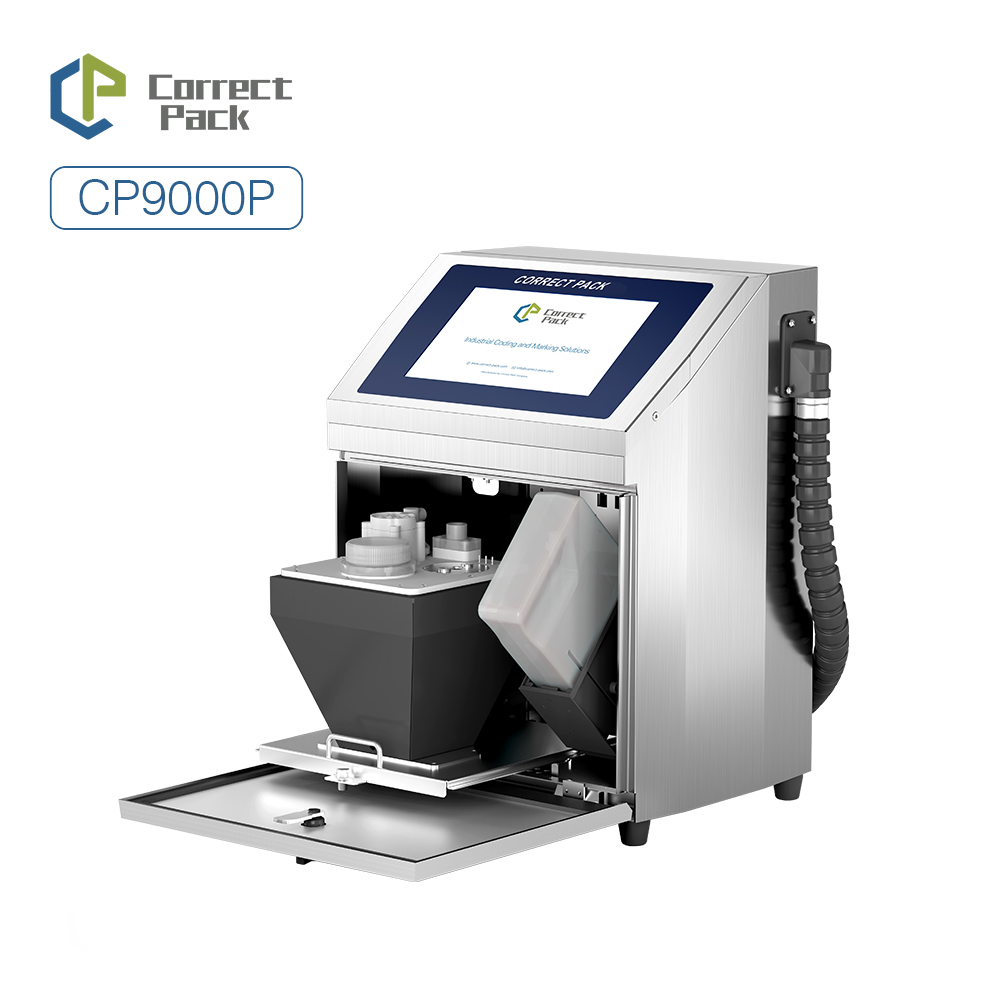
A Continuous Inkjet (CIJ) printer works by forcing pressurized ink through a tiny nozzle to create a stream of droplets. A vibrating crystal breaks the stream into uniform drops, some of which are electrically charged.
These charged droplets are deflected by an electric field to form text or codes on the product. Uncharged droplets are recycled back into the system. This continuous, high-speed process makes CIJ printers optimized for continuous, high-throughput production environments.
Continuous Inkjet Printer systems include several critical components working together seamlessly:
● Ink delivery system - Maintains consistent pressure and flow rates throughout operation
● Charging electrode - Controls droplet charging with microsecond precision timing
● Deflection plates - Create electric fields that steer charged droplets to targets
● Gutter system - Captures unused ink for recycling, making operations environmentally efficient
● Print head - Industrial designs withstand harsh manufacturing environments while maintaining accuracy
The continuous operation means your Printer never stops creating droplets during production runs. This design enables consistent high-speed coding without quality variations.
Thermal Inkjet Printer technology operates on a fundamentally different principle compared to Continuous Inkjet systems. These printers use heat to vaporize ink in small cells, where the vapor bubbles push ink droplets through nozzles onto product surfaces.
When the Printer is switched on, electrical current passes through resistive heating elements. This heating is done in microseconds, and this vaporizes a small quantity of ink. The growing vapor bubble forces ink out of the nozzle.
The heating element cools quickly after the ejection of the droplet. The bubble of vapor breaks, and the chamber is filled with fresh ink by a draw on the reservoir. In the Thermal Inkjet Printer systems in use today, this cycle repeats thousands of times each second.
Thermal Inkjet Printer performance depends on precise thermal management and timing:
● Heating elements - Resistive components that reach optimal temperature in microseconds
● Ink chambers - Tiny reservoirs where vapor bubble formation occurs
● Nozzle design - Precisely engineered openings that control droplet size and direction
● Cooling system - Ensures rapid cooling of the resistive elements to prevent thermal stress and maintain firing consistency
● Ink formulation - Special additives that vaporize cleanly without clogging nozzles
The design of the printer head influences the quality as well as the durability of Printer systems. Several nozzles operate in tandem to generate characters and graphics at production rates.
Now that you know how each of the technologies operates, it is time to look at the main differences that make a difference to your production line choices. This comparison will assist you in making the decision on the type of printer you need in accordance with your manufacturing needs.
Continuous Inkjet Printer systems are ideal in high-speed production systems where maximum speed is the key:
● Handle line speeds exceeding 1,000 feet per minute without quality degradation
● Maintain consistent timing regardless of production speed increases
● Never pause between prints due to continuous droplet stream operation
● Support 24/7 production schedules with minimal downtime requirements
Thermal Inkjet Printer units typically operate at moderate speeds suitable for most packaging applications:
● Optimal performance at speeds up to 500 feet per minute
● Excellent print quality maintained at recommended speeds
● Brief pauses between print cycles for thermal recovery
● Perfect for batch production and moderate-volume operations
Speed Factor | Continuous Inkjet | Thermal Inkjet |
Maximum Line Speed | 1,000+ ft/min | 500 ft/min |
Print Consistency | Constant | Cyclic |
Startup Time | Immediate | 30-60 seconds |
Speed Flexibility | Excellent | Good |
Print quality represents a critical factor where these technologies show distinct characteristics:
Thermal Inkjet Printer systems deliver superior print resolution and clarity:
● Higher resolution printing with sharper character edges
● Precise droplet placement creates professional-looking codes
● Excellent readability meets strict quality standards
● Superior performance on paper and porous materials
Continuous Inkjet Printer units produce industrial-grade quality suitable for most applications:
● Good quality for date codes, lot numbers, and basic graphics
● Consistent results across various surface types
● Adequate resolution for regulatory compliance requirements
● Reliable performance on non-porous materials
Understanding maintenance needs helps you plan operational costs and staffing requirements.
Continuous Inkjet Printer maintenance considerations:
● Daily cleaning procedures prevent nozzle clogging
● Regular gutter system maintenance ensures proper ink recycling
● Periodic print head cleaning maintains droplet formation quality
● Requires trained technical staff for complex procedures
● Higher maintenance frequency due to continuous operation
Thermal Inkjet Printer maintenance advantages:
● Sealed cartridge design reduces contamination risks
● Simple cartridge replacement procedures
● Minimal daily maintenance requirements
● Operator-level maintenance capabilities
● Scheduled print head replacement prevents quality degradation
Maintenance Aspect | Continuous Inkjet | Thermal Inkjet |
Daily Care | 15-30 minutes | 5-10 minutes |
Technical Skill | Expert Required | Basic Training |
Frequency | Daily | Weekly |
Part Replacement | Print Head Rebuild | Cartridge Swap |
Cost considerations extend beyond the initial purchase price to include operational expenses:
Initial Investment Comparison:
● Continuous Inkjet Printer - Higher upfront equipment costs
● Thermal Inkjet Printer - Lower initial investment requirements
● Installation complexity affects setup costs differently
● Training requirements impact implementation budgets
Operational Cost Factors:
● Ink consumption rates vary significantly between technologies
● Maintenance labor costs depend on technical skill requirements
● Replacement part expenses differ in frequency and complexity
● Energy consumption patterns affect utility costs
Cost Category | Continuous Inkjet | Thermal Inkjet |
Equipment Price | $15,000-$50,000 | $3,000-$15,000 |
Ink Cost/Print | $0.002-$0.005 | $0.01-$0.03 |
Annual Maintenance | $2,000-$5,000 | $500-$2,000 |
Training Investment | $1,000-$3,000 | $200-$500 |
Different ink formulations suit specific application requirements:
Continuous Inkjet Printer ink advantages:
● Extensive variety for different applications and surfaces
● Solvent-based inks provide excellent adhesion on non-porous materials
● Specialty inks for unique requirements (UV-resistant, food-grade)
● Fast-drying formulations prevent smearing on high-speed lines
Thermal Inkjet Printer ink characteristics:
● Water-based formulations work excellently on paper and cardboard
● Precise thermal activation requirements limit ink variety
● Clean vaporization prevents nozzle clogging issues
● Environmentally friendly options are available
Environmental considerations increasingly influence equipment selection decisions:
Continuous Inkjet Printer environmental factors:
● Solvent emissions require proper ventilation systems
● Ink waste occurs through the gutter system operation
● Higher energy consumption due to continuous operation
● Chemical handling procedures are needed for maintenance
Thermal Inkjet Printer environmental benefits:
● Sealed cartridges eliminate emissions during operation
● Minimal waste generation during normal use
● Lower energy consumption with on-demand heating
● Simplified disposal through cartridge recycling programs
Selecting between Continuous Inkjet Printer and Thermal Inkjet Printer technology requires careful analysis of your specific operational requirements. Consider these key decision factors:
Choose a Continuous Inkjet Printer when you need:
● Maximum production speeds exceeding 500 products per minute
● Coding on non-porous surfaces like plastics and metals
● 24/7 operation with minimal changeover requirements
● Specialty ink capabilities for unique applications
Choose a Thermal Inkjet Printer when you prioritize:
● Superior print quality and resolution
● Lower initial investment and operational costs
● Simplified maintenance procedures
● Environmental sustainability considerations
For manufacturers seeking reliable Thermal Inkjet Printer performance, Correct Pack offers industry-leading solutions designed for demanding production environments. Our advanced systems deliver exceptional print quality while minimizing operational complexity.
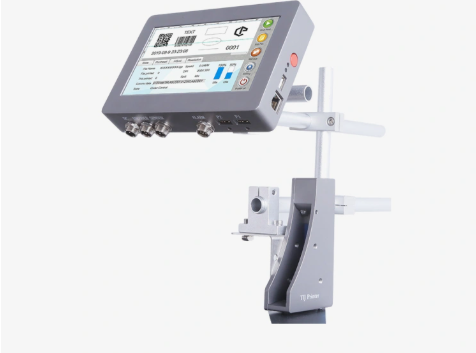
The Correct Pack Online Inkjet Printer Coding Machine combines cutting-edge Thermal Inkjet Printer technology with user-friendly operation. This system provides:
● High-resolution printing for superior code clarity and readability
● Simple cartridge replacement system reduces maintenance downtime
● Flexible connectivity options for seamless production line integration
● Robust construction designed for continuous industrial operation
Our Thermal Inkjet Printer systems are ideal in applications where a high level of consistency and quality coding is required and where there is a low maintenance requirement.
Choosing the right technology is a critical decision that depends on your production volume, desired print quality, and available technical resources. To ensure the best fit, it's recommended to run pilot tests with both options and assess their real-world performance in your specific application.
At Correct Pack, we realize that the selection of the correct coding technology will affect your whole production process. Our team of professionals assists you in analysing your needs and finding the best Thermal Inkjet Printer solution that fits your needs.
Ready to upgrade your production line coding with reliable Thermal Inkjet Printer technology? Visit Correct Pack to explore our complete range of industrial printing solutions, including our advanced Online Inkjet Printer Coding Machine, and discover how we can enhance your manufacturing efficiency with superior coding performance.
Science and technology oriented, continuous improvement, Correct Pack always committed to providing customers with valuable products and satisfy services

China Coding & Marking Machine Manufacturer
Correct Pack Technology Company
Address: Floor 3, Building 1, No. 728, Jinhu Road, Sanzao Town, Jinwan District, Zhuhai City