Correct Pack - Professional Coding and Marking Machine Manufacturer
Language
Correct Pack - Professional Coding and Marking Machine Manufacturer
Manufacturing companies must choose between laser marking and traditional methods. This choice affects production costs, product durability, and compliance with industry rules. Manufacturers have used traditional methods for years. But laser technology provides better traceability, durability, and helps meet strict regulations.
In industries such as food, pharmaceuticals, and hardware, coding and marking are vital. They help with product identification, traceability, and following regulations. Accurate marking helps keep products safe and identifiable. This includes batch codes, expiration dates, barcodes, and serial numbers. This way, items are always ready for sale. Coding and marking are very important. They help prevent errors, support quality control, and build consumer confidence.
Correct Pack is a laser marking machine manufacturer specializing in innovative coding and marking solutions. We have extensive experience in the coding and marking industry. We offer a variety of high-quality equipment. This includes laser marking machines and inkjet printers. Industries worldwide trust our solutions. They value our precision, reliability, and ease of use.
Let’s explore laser marking technology now that we know about traditional methods. We’ll see what’s better. Laser marking technology uses light beams to change material surfaces. This happens through heating or chemical reactions.
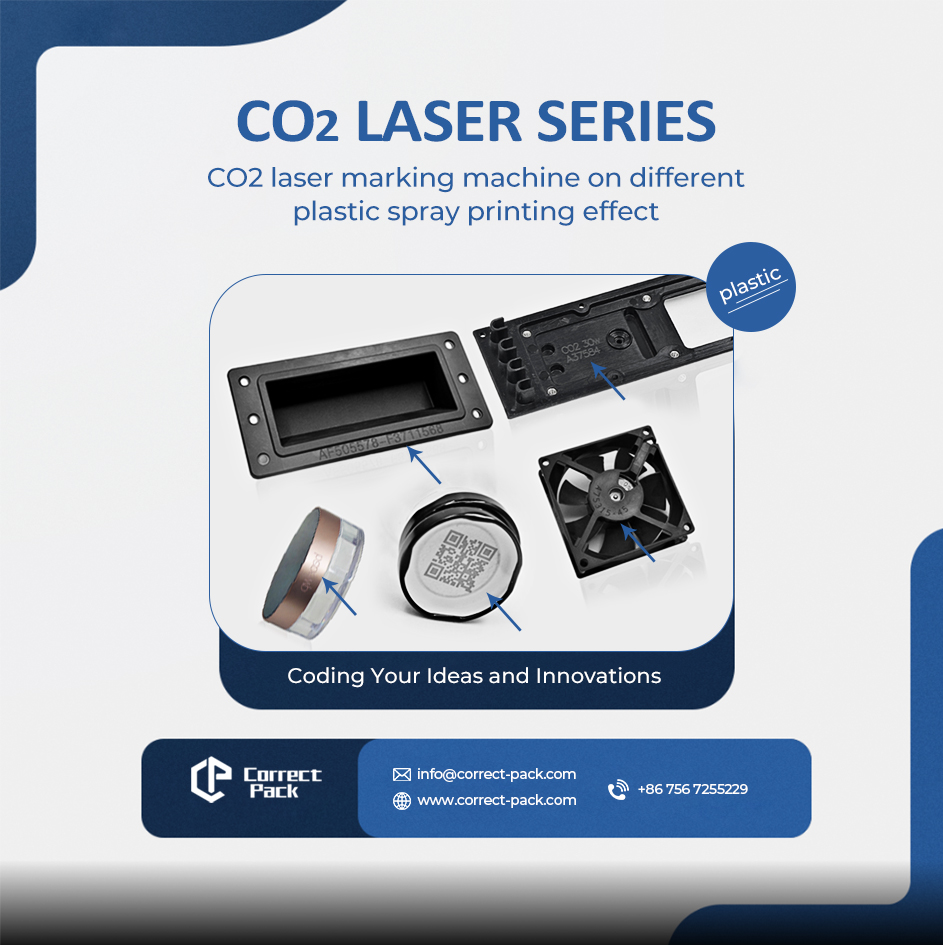
CO2 lasers produce infrared light at 10.6 micrometers. This wavelength is best for absorbing organic materials like wood, paper, leather, and some plastics. The longer wavelength allows effective interaction with many organic materials.This allows for both surface marking and cutting through.The packaging industry uses CO2 lasers for date coding, lot marking, and decorative applications. The technology works with flexible materials. Other marking methods often struggle with these. It does so while maintaining high speed and precision.
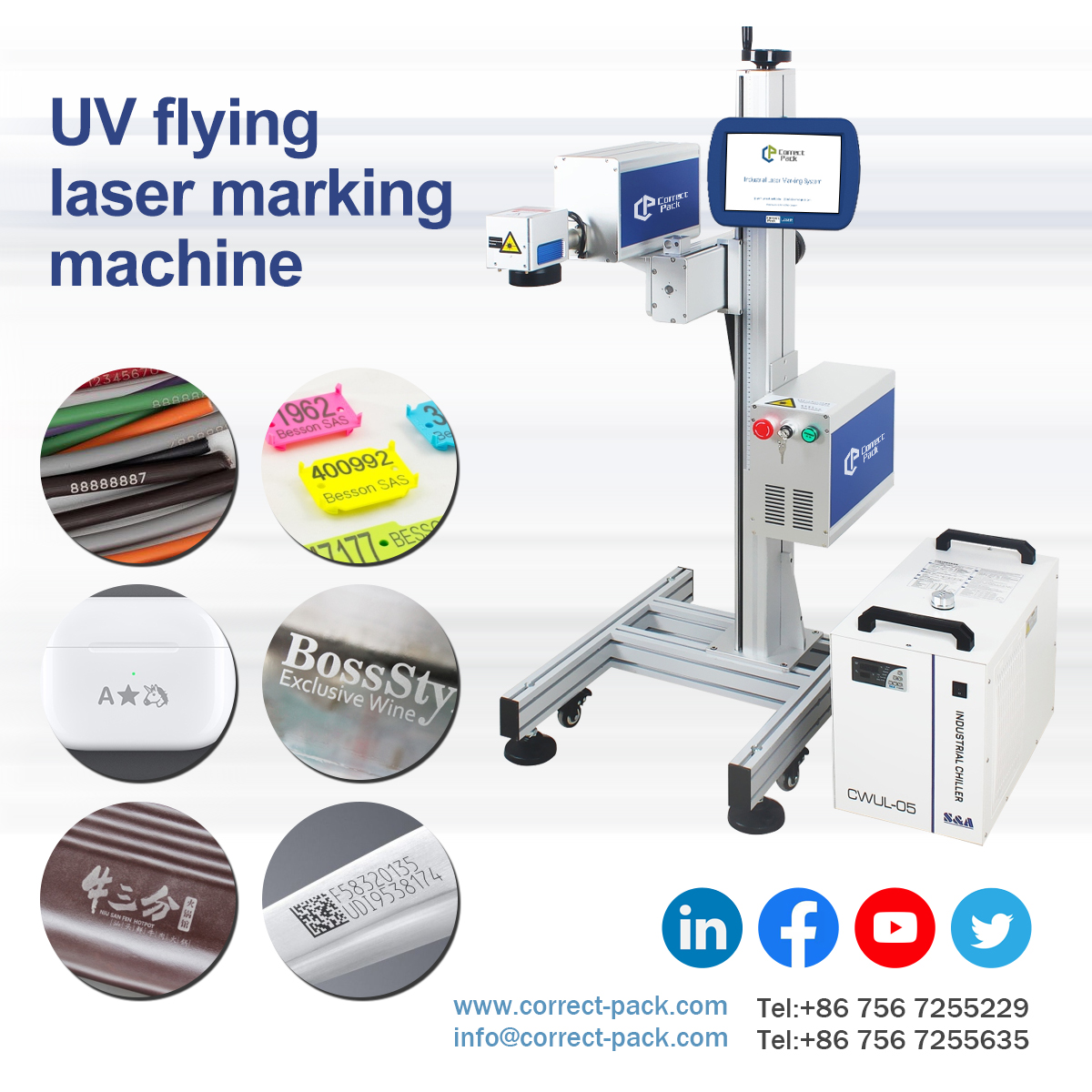
UV laser marking works at 355 nanometers. It uses photochemical processing to create marks. This happens by breaking molecular bonds with minimal thermal impact. This “cold” processing minimizes heat-affected zones and enables the marking of temperature-sensitive materials.
Laser marking offers precision far exceeding traditional methods. It allows for tiny text, detailed graphics, and complex patterns that mechanical or inkjet systems can’t achieve.
A key advantage of laser marking is its permanence. Marks resist fading, wear, chemical exposure, and environmental conditions that compromise traditional methods. This durability ensures traceability during product lifecycles. It meets strict regulations and customer expectations.
Laser marking is a non-contact process. This means there is no tool wear, no consumable costs, and no mechanical stress on parts. Production runs continue without issues. There’s no need for tool changes or ink replacements. Marking quality stays consistent, no matter the production volume.
Laser systems are very versatile. They can handle different materials and applications. You can adjust the software instead of changing the hardware. The same system can mark metal parts, plastics, or glass. You just need to adjust the settings.
The environmental benefits of laser marking are significant. It eliminates the need for inks, solvents, and chemical consumables, producing minimal waste. This reduces disposal concerns and contributes to more sustainable manufacturing processes.
Traditional marking encompasses several techniques that manufacturers have relied on for generations. These methods still fit certain uses where their features match production needs.
Inkjet printing is still popular for high-volume production runs. Here, speed is more important than permanence. This method uses tiny nozzles to spray liquid ink onto surfaces. It makes clear marks that are great for temporary identification or date coding. Food packaging, shipping labels, and batch identification represent common inkjet applications.
The technology excels in situations requiring the rapid application of variable information. Inkjet technology helps production lines run thousands of units per hour. It lets you change text, numbers, or simple graphics while production keeps going.
Pad printing uses a flexible silicone pad to transfer ink from an etched plate to products. This indirect printing method works well for complex 3D shapes. Traditional methods often struggle with these designs. Electronics manufacturers use pad printing for labels. Medical device companies use it on curved surfaces like syringes and surgical tools.
Traditional marking methods are popular and useful, but they have major limitations. These limitations make them less suitable for today’s manufacturing needs. Manufacturers need to think about durability, precision, and maintenance costs. These are key drawbacks when selecting a marking method.
Durability concerns top the list of traditional method weaknesses. Inkjet marks can fade or smudge. They may also wear away from handling, exposure to the environment, or cleaning. Critical applications requiring permanent identification, thus, cannot rely on inkjet technology alone. Mechanical engraving is permanent, but it can create stress points in materials. Over time, these stress points may weaken their structural integrity.
Traditional methods have precision limits. This makes them best for simple designs and larger text sizes. Most traditional systems can't handle fine details, complex graphics, or microscopic markings. This is a problem for applications that require dense information, like QR codes. It's also an issue for apps focused on high aesthetic appeal.
Traditional systems need constant upkeep. This can raise costs and lower uptime. Inkjet systems, for instance, require regular cleaning, ink replacement, and nozzle maintenance. Mechanical systems need tools replaced, calibrated, and adjusted. These tasks take up valuable production time and resources.
Laser marking offers micrometer-level accuracy. This ensures clear text, sharp graphics, and accurate placements.Traditional methods cannot achieve comparable precision. UV laser systems make marks smaller than 25 micrometers. This supports applications that need dense information in a small area.
Traditional methods achieve positioning accuracy within tenths of a millimeter in most cases. This precision level is good for many uses. But, it can't manage miniaturized parts or high-density marking needs.
Laser systems work with metals, plastics, ceramics, glass, and composites. They do this by choosing the right wavelength and optimizing parameters. UV lasers excel with temperature-sensitive materials, while fiber lasers optimize metallic applications.
Traditional methods show material limitations based on physical properties. Mechanical engraving needs hard materials to handle cutting forces. Inkjet relies on surface porosity and chemical compatibility.
Laser marks bond with base materials using heat or light. This creates lasting identification that withstands environmental wear. UV laser marking on aerospace wires stays clear after 770 hours at 229°C and 17 years of UV exposure testing.
Traditional marks depend on adhesion, absorption, or mechanical retention. Environmental exposure, handling, and cleaning procedures can compromise mark integrity over time.
Initial costs for laser systems are higher than traditional options. However, operational savings build up. This happens because there are no consumables. Maintenance is easier, and productivity is higher. Total cost of ownership calculations favor laser technology over multi-year periods. Traditional systems need ongoing costs for inks, tools, maintenance, and replacement parts. These expenses raise operational costs.
Laser coding and marking have big advantages over traditional printers. They are more durable, precise, and legible. Plus, they are cost-effective. Lasers create permanent, high-contrast marks that are precise.
Correct Pack, a laser marking machine manufacturer, focuses on advanced marking solutions. We offer expert consultation to help manufacturers create effective identification systems. Our technical experts have strong knowledge of laser applications. They analyze specific requirements, substrate material properties, production speeds, and quality standards. Contact Correct Pack industrial marking machine manufacturer today to explore how our laser marking expertise can enhance your manufacturing processes.
Science and technology oriented, continuous improvement, Correct Pack always committed to providing customers with valuable products and satisfy services

China Coding & Marking Machine Manufacturer
Correct Pack Technology Company
Address: Floor 3, Building 1, No. 728, Jinhu Road, Sanzao Town, Jinwan District, Zhuhai City