Correct Pack - Professional Coding and Marking Machine Manufacturer
Language
Correct Pack - Professional Coding and Marking Machine Manufacturer
In today’s competitive manufacturing market, how you label or mark your products is crucial. Each mark—serial numbers, barcodes, logos, and batch codes—helps with traceability. They boost safety and strengthen brand identity. Printing methods like inkjet and screen printing have done this job well in the past. In recent years, UV laser marking has become a cleaner, faster, and more durable option.
Choosing between these two methods isn’t about the latest tech. It depends on your product type, production scale, and long-term needs. Correct Pack Technologies makes laser marking machines. They focus on advanced laser marking solutions. They also offer consulting to help manufacturers create effective identification systems.
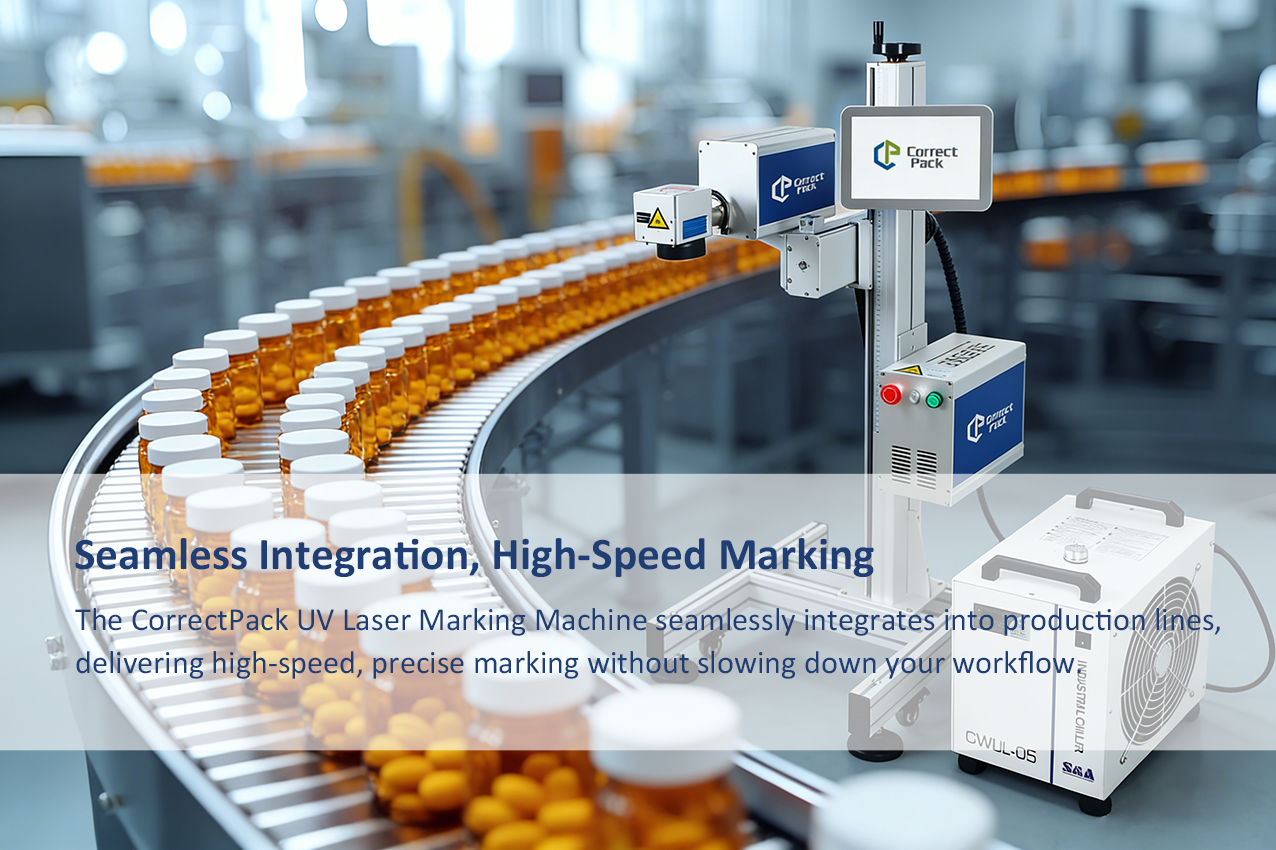
UV laser marking is a modern, non-contact method. It uses a focused ultraviolet laser beam. This process creates permanent marks on many materials. Engineers make a UV laser by passing the beam through two extra crystals. Conventional fiber laser systems do not have these crystals. First, a standard wavelength laser (1064 nm) passes through a nonlinear crystal. Then, the wavelength changes to 532 nm. Next, the light goes through another crystal. This process reduces its wavelength to 355 nm.
UV lasers are often called third-harmonic generation (THG) lasers. This name comes from the fact that they produce the third wavelength. Cold marking is when these lasers mark and process with little heat stress.
Now that we know about traditional methods, let’s explore laser marking technology. We’ll find out which is superior. Laser marking technology uses light beams to change material surfaces. This happens through heating or chemical reactions.
CO2 lasers produce infrared light at 10.6 µm. This wavelength is excellent for absorbing organic materials. It works well on wood, paper, leather, and many plastics. The longer wavelength goes deeper into materials. This allows for both surface marking and through-cutting tasks.
Packaging industries use CO2 lasers for date coding, lot marking, and decorative applications. This technology works well on flexible materials that are difficult to mark with other methods. It accomplishes this with speed and precision.
UV laser marking works at 355 nanometers. It uses photochemical processing to create marks. This happens by breaking molecular bonds, not by heat. This “cold” processing minimizes heat-affected zones and enables the marking of temperature-sensitive materials.
Correct Pack Technologies’ UV laser systems shine in medical device manufacturing, aerospace wire marking, and pharmaceutical uses. In these fields, material integrity is crucial. The technology leaves permanent marks on materials such as ETFE- and PTFE-insulated wires. This happens when it interacts with titanium dioxide particles in the insulation.
Traditional printing uses ink, plates, or ribbons. It transfers designs, text, or images onto surfaces. Companies have used it for decades. They label, brand, or decorate products across many industries.
The process is quick and cheap for large-scale production. This makes it a favorite for packaging, product labels, and promotional materials.
Traditional printing uses consumables like ink and solvents. Because of this, marks can fade or wear off over time. This is especially true with heat, friction, or chemicals. It also involves more maintenance and setup compared to laser-based technologies.
Inkjet printing is still popular for large production runs. Here, speed is more important than how long the prints last. This method uses liquid ink from tiny nozzles. It makes visible marks. These marks are well-suited for temporary identification or date coding. Food packaging, shipping labels, and batch identification represent common inkjet applications.
The technology excels in situations requiring the rapid application of variable information. Production lines that run thousands of units per hour gain from inkjet technology. It allows them to change text, numbers, or simple graphics without stopping production.
Mechanical engraving uses cutting tools or diamond-tipped styluses to remove material from surfaces. This subtractive process makes permanent marks. It carves grooves into metal, plastic, or composite materials. Jewelry engraving, industrial nameplates, and trophy personalization showcase mechanical engraving’s capabilities.
Mechanical engraving makes clear, touchable marks. They remain readable, even when covered with paint, dirt, or other substances. Mechanical methods are useful in tough industrial settings. They ensure that marks last through extreme conditions.
Pad printing uses a flexible silicone pad to transfer ink from an etched plate to products. This indirect printing method makes complex 3D shapes that traditional methods can't manage. Electronics makers use pad printing for labeling parts. Medical device firms apply it to curved surfaces, such as syringes and surgical tools.
So we've seen how UV lasers differ from traditional methods. But why should you make the switch? Here's the lowdown on why UV laser marking is a total game-changer:
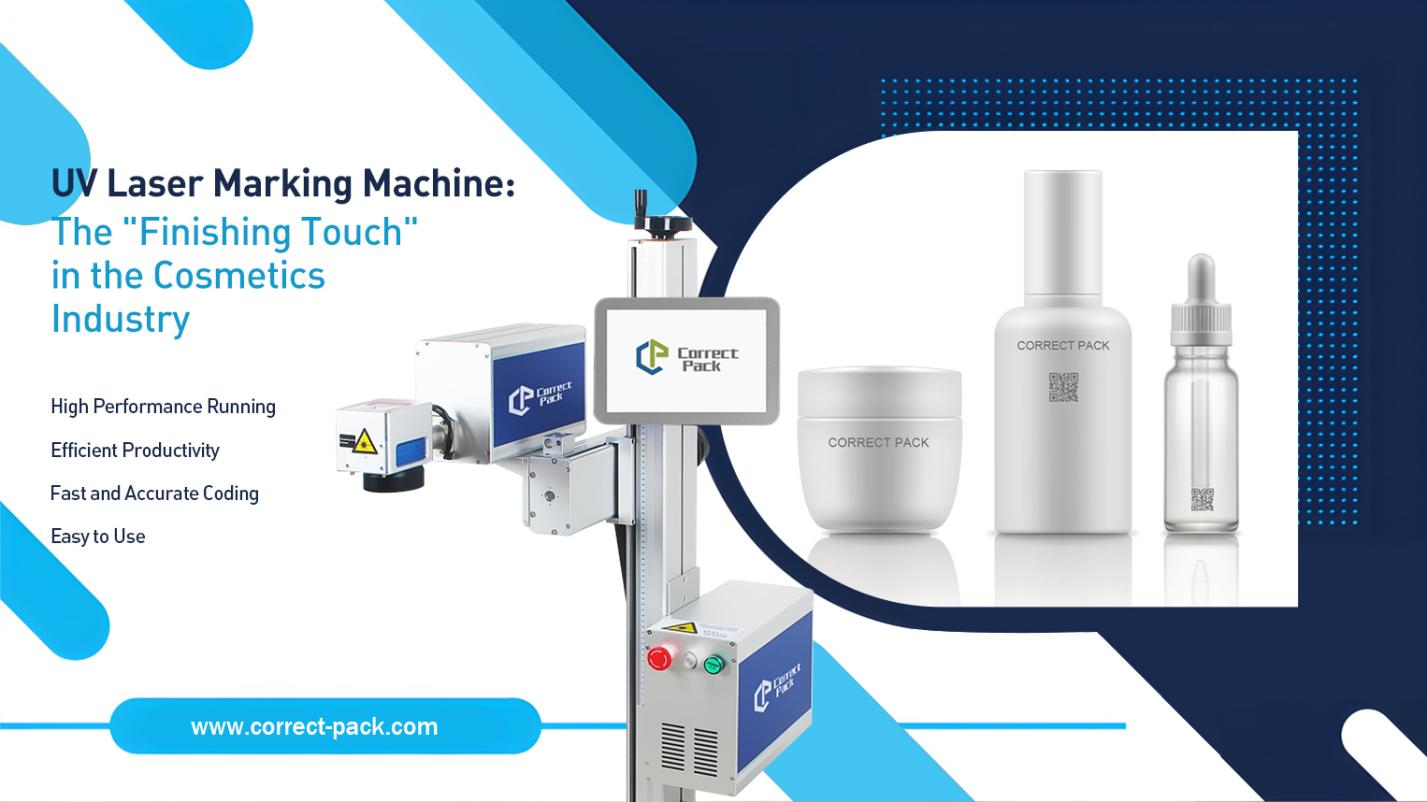
Remember that super fine-tip pen analogy? UV lasers deliver markings with exceptional precision, even on the tiniest components. This creates many possibilities for detailed designs, barcodes, serial numbers, and more. Think of medical devices, electronics, and jewelry – where even the smallest detail matters.
UV lasers are ideal for heat-sensitive materials because of their "cold" marking process. Say goodbye to burning, melting, or warping. You can now mark delicate plastics, thin films, and organic materials with assurance.
UV laser markings are clean, sharp, and permanent. They also show a strong resistance to fading, abrasion, and chemicals. They are ideal for tough situations where durability matters. This includes automotive parts, aerospace components, and industrial tools.
UV lasers are fast. They mark products quickly, speeding up production and reducing cycle times. Also, there’s no need for messy inks or extra supplies. This means less downtime and easier maintenance.
UV laser marking is a clean and green process. It creates no harmful emissions or byproducts. This makes it a great choice for eco-friendly businesses.
UV laser marking is a great choice. It combines precision, speed, versatility, and sustainability. It's the top choice for today’s manufacturers who want quality and efficiency.
● High Costs and Setup Complexity: Screen printing, film production, and printing costs are high. The setup is complex, and color correction is often not changeable after the initial edit.
● Complex Technology: Requires complicated processes and long production cycles.
● Inconsistent Quality: Many overprinters have high scrap rates, and color deviation is large.
● Reliance on Skilled Labor: We need skilled printing technicians with years of experience.
● Manual Production: More people need to make products by hand.
● Media and Ink Limitations: Thermal transfer printing uses thermal sublimation ink, which can cause color and positioning deviation. Traditional signage often only makes monochrome signs.
Feature | UV Laser Marking | Traditional Printing (Inkjet/Pad) |
Marking Principle | Photochemical ("Cold" processing) | Contact (Transfer of ink via nozzle/pad/plate) |
Material Impact | Minimal Heat-Affected Zone (HAZ) | Can cause heat stress, melting, or warping |
Marking Speed | High (Fast cycle times, high throughput) | Medium to High (Depends on drying/curing time) |
Mark Quality/Resolution | Exceptional (High contrast, precise detail) | Medium (Can suffer from bleeding or color deviation) |
Durability of Mark | Permanent (Resistant to abrasion, chemicals, fading) | Variable (Can fade, scratch, or wear off over time) |
Consumables Required | None (Only electricity) | Yes (Ink, solvents, ribbons, pads, plates) |
Maintenance/Downtime | Low (No ink mess, minimal mechanical wear) | High (Cleaning nozzles, replacing ink, mechanical setup) |
Best For | High-value, delicate, heat-sensitive, or precision components (Medical, Aerospace) | High-volume, low-cost packaging and temporary coding (Food, Shipping) |
Correct Pack Technologies makes laser marking machines. They provide advanced marking solutions and offer consultation services. This helps manufacturers set up the best identification systems. Our technical experts have strong knowledge of laser applications. They analyze application needs, substrate material properties, production speeds, and strict quality standards. Contact Correct Pack Technologies today. Let us show you how our laser marking can improve your manufacturing processes.
Science and technology oriented, continuous improvement, Correct Pack always committed to providing customers with valuable products and satisfy services

China Coding & Marking Machine Manufacturer
Correct Pack Technology Company
Address: Floor 3, Building 1, No. 728, Jinhu Road, Sanzao Town, Jinwan District, Zhuhai City