Case Study
Correct Pack - Professional Coding and Marking Machine Manufacturer
Language
A single unreadable lot code can halt an entire production line, trigger costly fines, or put your brand’s reputation at risk. To ensure accurate tracking and end-to-end visibility across global supply chains, modern factories rely on dependable coding technology. Here is how Continuous Inkjet (CIJ) printing provides the speed, precision, and durability required for a seamless product traceability system.
Traceability lives or dies by one thing: the printed code has to be readable. A smudged barcode, a faded batch number, or a high-speed line that distorts characters—any of these can blind the entire supply chain. Continuous Inkjet printers tackle these problems head-on, and they do it through some fairly specific engineering choices.
Production lines move fast these days. Really fast. Conventional contact printers or slower marking methods tend to create bottlenecks, and nobody wants to choose between keeping the line moving and getting a clean code. CIJ is a non-contact solution for industrial coding. By generating a continuous, high-frequency stream of ink droplets, the CIJ system can easily achieve print speeds well over hundreds of meters per minute. Furthermore, because the printhead never physically touches the item, it can maintain this rapid pace without causing surface damage or requiring the production line to slow down.
A code that won't scan is useless. CIJ gets around that with electrostatic deflection, which steers individual droplets to precise coordinates on the surface. The result? Clean text, crisp micro-printing, and sharp 2D symbols, even on surfaces that are uneven, curved, or flexible. Consistent character shapes prevent scanning errors later on, so distribution centers can read every code without fail.
Packaging comes in all forms: thin plastic films, rigid HDPE bottles, corrugated cardboard, glass, aluminum cans, rubber pipes—the list goes on. CIJ handles the range well. Solvent-based inks dry fast, bonding to non-porous surfaces in seconds and stopping ink from bleeding or smudging. That kind of material flexibility lets manufacturers with multiple product lines use the same coding equipment across the board.
Products go through a lot. Production, transport, storage—exposure to condensation, grease, extreme temperatures, friction, and chemical washing can wipe out standard printed marks in no time. CIJ inks are engineered for these conditions. Some use thermochromic compounds, changing color during sterilization (retorting, for instance, in food processing). Others resist alcohol, standing up to chemical wipes in pharma settings. And heavy-duty solvent-based formulations hold their own against abrasion, moisture, and UV light in industrial storage.
Traceability depends on dynamic data flowing seamlessly between production equipment and central management. CIJ systems no longer act as isolated hardware. They integrate directly with broader digital architectures via standard industrial protocols like Ethernet/IP, Modbus, or TCP/IP, seamlessly linking to Enterprise Resource Planning (ERP) and Manufacturing Execution System (MES) platforms. Automated code updates, real-time database lookups, and instant serialization become routine. Manual message loading is eliminated, and so is the risk of human error.
To build an effective end-to-end tracking system, manufacturers must apply clear identification markers at every stage of production. CIJ technology handles a wide array of static and dynamic data formats required by regulatory frameworks globally.
| Traceability Data Type | Core Standard / Format Examples | Key Operational Purpose |
|---|---|---|
| Batch & Lot Numbers | Alphanumeric strings, Shift IDs, Factory IDs | Enables targeted isolation of affected inventory during quality holds or safety recalls. |
| Manufacturing & Expiry Dates | DD/MM/YYYY, Best Before, EXP, Julian Dates | Controls inventory rotation (FIFO) and complies with global shelf-life mandates. |
| Serial Numbers | Dynamic sequential digits, UID codes | Assigns item-level identity to combat grey-market diversion and verify authenticity. |
| Barcodes & QR Codes | GS1-128, DataMatrix, 2D QR | Stores multi-variable data in compact formats for automated optical scanning at high speeds. |
Batch and lot codes group products made within a specific time window, shift, or material run. If a quality issue crops up, say a defective raw material batch, manufacturers can use the printed lot number to isolate and recall only the affected items. That avoids pulling entire production runs. The savings can run into millions.
Clear production dates, manufacture timestamps, and expiration parameters protect consumer safety and simplify inventory management. CIJ systems dynamically pull time data directly from internal system clocks, updating expiration formulas automatically to ensure every package displays compliant date codes without manual operator intervention.
Unit-level serialization requires printing a unique alphanumeric identifier on every single item coming off the line. CIJ hardware seamlessly processes incrementing or randomized serial numbers at full line speeds. This unit-level granularity forms the foundation for anti-counterfeiting strategies, grey-market tracking, and targeted warranty verification.
Machine-readable codes keep modern logistics running. CIJ printers produce crisp 1D barcodes (Code 128, UPC) and 2D DataMatrix or QR codes. These small matrices carry a lot of data: batch numbers, dates, destinations, origin details. At distribution checkpoints, vision systems read them instantly, sorting and recording product information on the spot.
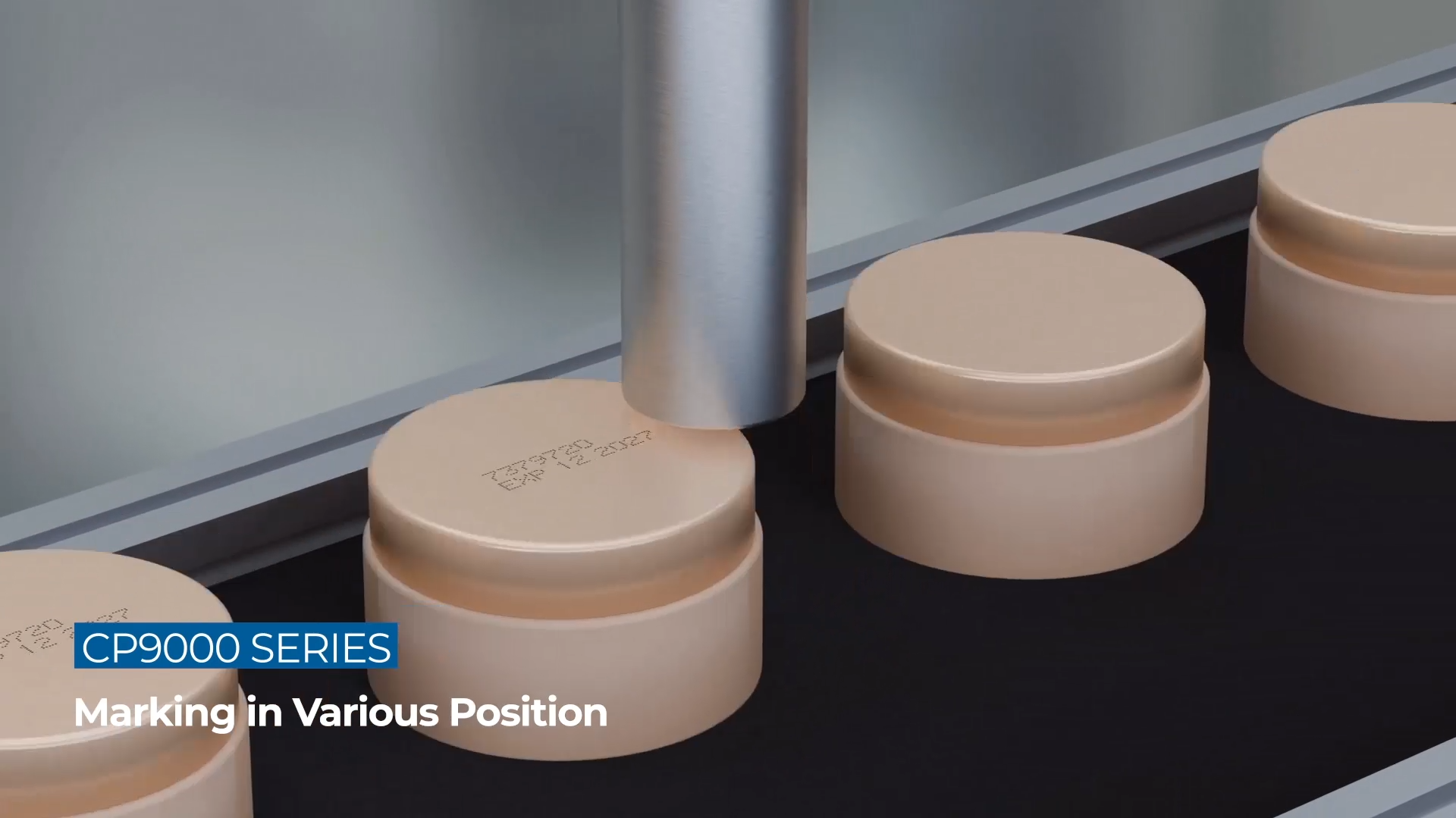
Operational challenges vary by sector. Environmental constraints differ too. CIJ printers adjust to these specialized needs, delivering coding solutions that survive various factory-floor conditions and rigorous distribution pipelines.
Food lines move fast. High humidity, washdown zones, subfreezing refrigeration—these are everyday conditions. CIJ printers offer exceptional ink versatility, supporting both standard inks for dry environments and advanced formulations for harsh conditions. These specialized, fast-drying formulations cut through condensation, printing directly onto glass bottles, wet aluminum cans, flexible pouches, and Polyethylene Terephthalate (PET) containers. Codes hold up through refrigerated transit. That protects brands from compliance penalties and supports precise recalls.
Pharma follows strict rules. The EU Falsified Medicines Directive and US DSCSA demand individual unit serialization with zero tolerance for unreadable codes. CIJ printers produce compact 2D DataMatrix codes and miniature text on small vials, blister packs, and cartons. Inks formulated to resist alcohol keep marks intact through handling, sterilization, and chemical wipes, so optical scanning works perfectly across the distribution network.
Electronic components are small and sensitive to heat. When marking Printed Circuit Boards (PCBs), microchips, and connectors, the process must avoid electrical issues or physical damage. CIJ offers precision miniature printing, with characters down to 0.8 mm on tight surfaces. Thermally stable and electrically insulating inks survive soldering without degrading or causing shorts.
Cosmetics packaging is about aesthetics. Smooth glass, curved metals, coated plastics—labels often don't adhere well, or they disrupt the design. CIJ technology prints directly onto irregular shapes with minimal visual impact. To ensure these codes survive daily use, CIJ printers utilize highly durable inks that resist abrasion and solvents, keeping batch numbers, ingredients, and manufacturing details clear, even when exposed to essential oils, alcohol, or frequent handling.
Heavy industries including automotive assembly, pipe extrusion, and cable production regularly face friction, oil exposure, and outdoor storage. To overcome these harsh conditions, CIJ printers apply high-contrast tracking codes, meter marks, and lot IDs directly onto extrusions, metal parts, and rubber hoses. Formulated with solid pigment particles, these inks provide high-contrast visibility on dark surfaces while forming a durable bond that withstands UV fading, rain, and rough handling.
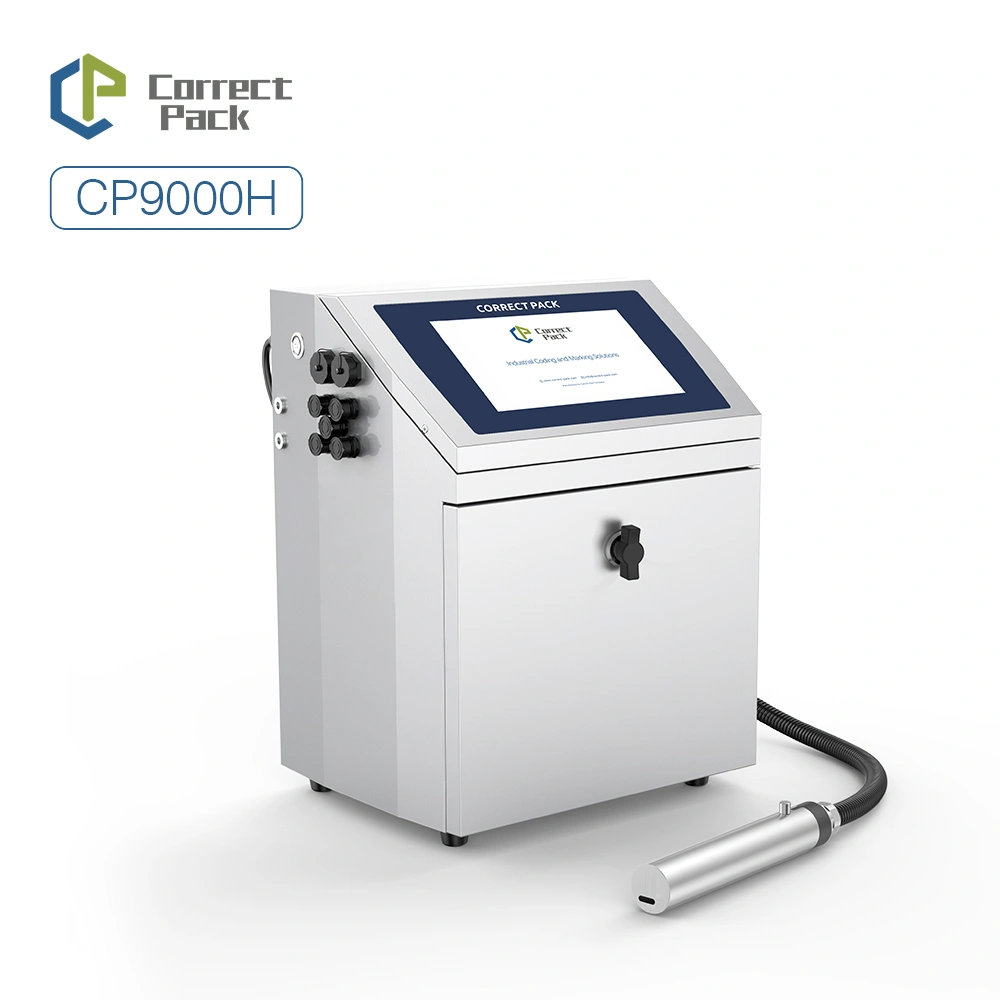
Deploying CIJ technology is only the first step toward building a robust traceability network. To achieve consistent print clarity, high scan rates, and maximum operational uptime, strategic operational practices must be put into place.
Ink chemistry dictates print performance. Choosing a generic ink formulation often leads to poor adhesion, smudging, or clogged nozzles.
Evaluate the target substrate material (glass, plastic, metal, or paper).
Consider environmental exposure (heat, moisture, UV, or chemical washing).
Determine required drying speed based on conveyor line rates.
Partnering with technical specialists to match ink formulations precisely to your specific operational criteria prevents premature code degradation down the supply chain.
Code visibility directly impacts scanner read rates. Irregular product orientation or fluctuating conveyor speeds create distorted codes that lead to false rejections during automated inspections.
Mount printheads securely to dedicated line guides or traversing mechanisms to maintain a fixed distance between nozzle and product. Additionally, integrate shaft encoders to synchronize printing output dynamically with line speeds, ensuring consistent character geometry regardless of acceleration or deceleration.
To eliminate human error, move away from manual code entry at the production line. Connect CIJ units directly to your enterprise database via central manufacturing software.
Pairing CIJ systems with inline vision inspection systems provides immediate quality control. Automated cameras scan every code as it leaves the printer, automatically verifying legibility and data accuracy. If an unreadable code or incorrect sequence is detected, the system triggers real-time rejection mechanisms without interrupting overall line movement.
To preserve coding clarity and maintain uptime, continuous inkjet equipment requires disciplined, preventative maintenance schedules:
⚙Routine Nozzle Cleaning: Clean printheads regularly to prevent ink buildup and maintain optimal drop trajectory.
⚙Fluid Level Monitoring: Maintain proper solvent-to-pigment viscosity ratios using genuine fluids to avoid drop deflection issues.
⚙Filter Replacement: Replace internal ink and air filters at recommended service intervals to keep the fluid system free of contaminants.
⚙Environment Control: Keep printheads clean and protected when operating in dusty, oily, or wet environments.
Product traceability directly depends on the reliability and precision of your industrial coding setup. As manufacturing standards rise and supply chains demand greater transparency, Continuous Inkjet printing offers the speed, durability, and integration capabilities required to protect your brand, maintain compliance, and eliminate production bottlenecks.
Building an error-free coding line requires hardware that fits your specific packaging demands. Correct Pack provides reliable CIJ printing solutions and industrial coding equipment engineered for diverse packaging materials and demanding factory environments. Ready to upgrade your line traceability and operational efficiency? Contact our technical experts today to find the right coding solution for your business.
Science and technology oriented, continuous improvement, Correct Pack always committed to providing customers with valuable products and satisfy services

China Coding & Marking Machine Manufacturer
Correct Pack Technology Company
Address: Floor 3, Building 1, No. 728, Jinhu Road, Sanzao Town, Jinwan District, Zhuhai City