Correct Pack - Professional Coding and Marking Machine Manufacturer
Language
Correct Pack - Professional Coding and Marking Machine Manufacturer
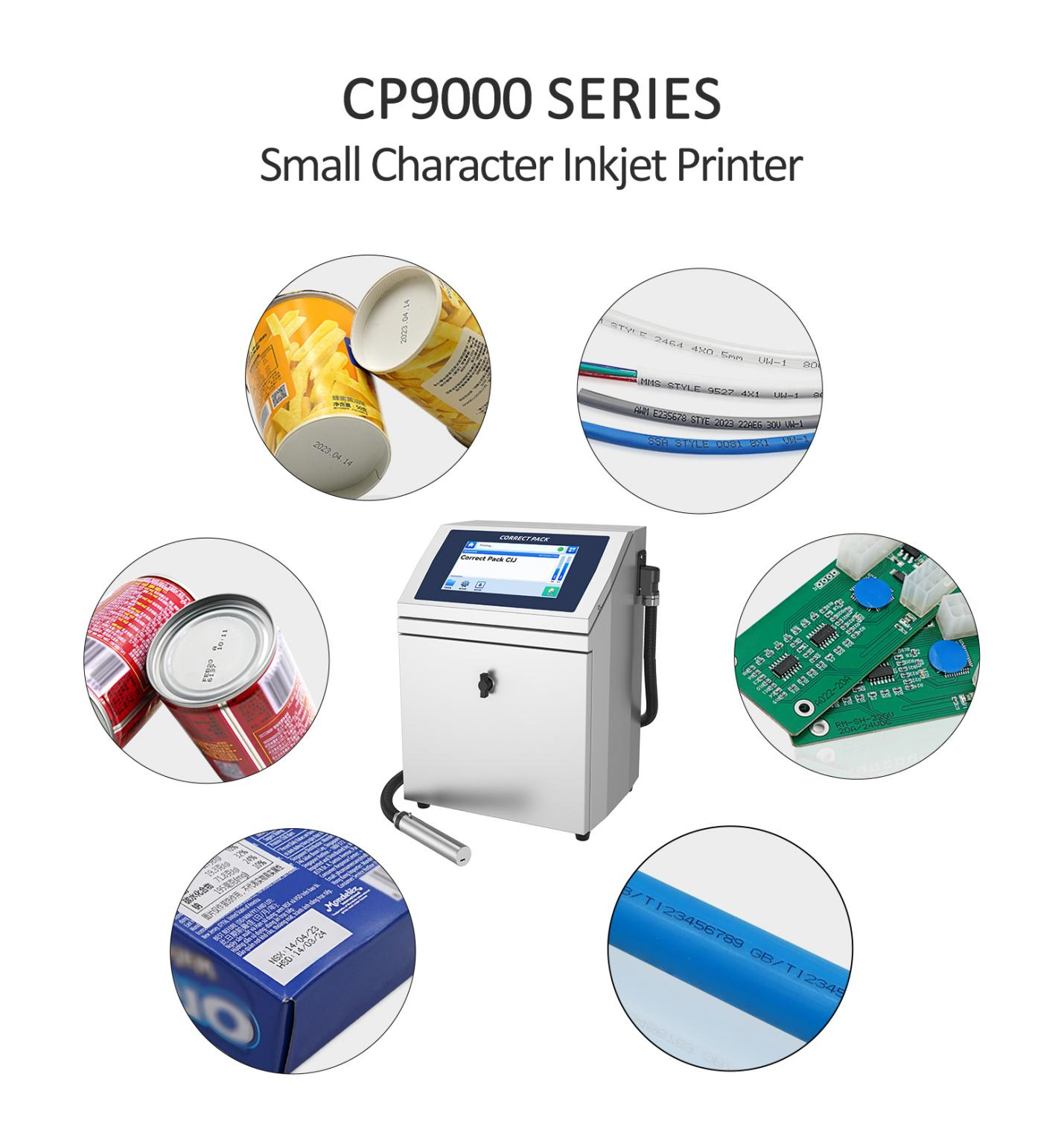
When you work in the food industry long enough, you start to realise that the smallest things can cause the biggest problems. One of those “small things” is the printed code on food packaging. Food packaging must meet health and safety standards. This is very important. One key requirement is ensuring that all printed markings use food-safe inks. Small character inkjet printers, such as continuous inkjet (CIJ) printers, are common in the food industry. They’re fast, reliable, and can print on almost any surface the industry uses. But even the best CIJ machine won’t solve problems if the wrong ink is running inside it. So choosing the right food-safe ink is essential, not optional. It’s part safety, part compliance, and part common sense.
At Correct Pack, we focus on high-quality inkjet coding machines. This includes CIJ printers. They are known for their precision, speed, and reliability in marking food packaging. In this article, we’ll help you choose the right food-safe CIJ inks for your marking needs. This will make your production process compliant and efficient.
The Importance of Ink in Food Packaging
Think about the importance of ink to use on a package, a printer, or a brand owner should know if the ink will be used for Direct or Indirect Food Contact.
Direct Food Contact
Direct food contact – is specified as to when packages have printed places that are considered to have direct contact with the foodstuff, or whereby it can reasonably be expected the printed place will come into contact with food, or it can be expected the printed place will move its constituents to food under normal or foreseeable conditions of use. For this purpose, Direct Food Contact ink (known as DFC compliant) must be specified. It significantly reduces health risks due to migration and opens up new opportunities for printing inside the packaging.
Indirect Food Contact
Indirect food contact – According to the use of foreseeable of, the printed package does not result in direct contact between the foodstuff and the print, then a food packaging compliant printing ink can be used. Depending on the company, these types of inks are also commonly known as ‘Low Migration’ products.
Addressing Risks of Chemicals in Coding and Marking
Concerning the inks used for coding and marking, food packaging suppliers need to be mindful to address the risks of chemicals from printing inks used to code primary packaging. This is mainly the case as inks utilized in this way do sometimes come into contact with food, for example, the coding of eggs and beverages.
Responsibility for Food Safety and Packaging Compliance
The manufacturer of packaging and ink is responsible for making sure that the food, in combination with the packaging and printing ink, is safe for human consumption. Safety and security to consumers are of foremost importance in all legislation, and, in association with the food and drink manufacturers (effectively the customers of the packaging and ink suppliers), all followers have a part to play in the compliance process.
Choosing the Right Food-Safe CIJ Ink for Your Inkjet Coding Machine
When selecting food-safe inks for your inkjet coding machine, consider these key factors:
1. Regulatory Compliance
The first step to pick the right food-safe ink is to make sure it meets all the rules. In the United States, inks for food packaging must follow FDA rules. Always request documentation confirming regulatory compliance.
At Correct Pack, our small character inkjet printers and CIJ printers work with certified, food-safe inks.
2. Ink Formulation
Manufacturers make food-safe inks from non-toxic solvents, pigments, and safe materials. They don’t pose health risks. Manufacturers make some inks for specific packaging materials like plastic, glass, or metal. The ink formulation must match the packaging surface. This ensures strong adhesion and durability.
Solvent-based inks are often used in continuous inkjet printers for food packaging. They stick well to non-porous surfaces such as plastic and metal. Water-based inks are commonly used for packaging made of paper or corrugated cardboard.
3. Ink durability and resistance
Food packaging must endure handling, transport, and storage. The printed codes should not fade or become hard to read. This is where the durability of the ink comes into play. Food-safe CIJ inks need to resist abrasion, smudging, and moisture. They should also stand up to oils and chemicals often found in food settings.
A good inkjet coding machine should use inks that create clear, legible marks. These marks should stay intact, even in tough conditions. Ink formulations made for high-speed printing in continuous inkjet printers are durable. They ensure the codes on your food packaging are clear and easy to read throughout the product's life.
4. Ink Drying Time
In food production, speed and efficiency are crucial. The ink's drying time is key. It affects how fast the packaging moves on the production line. Inks that have a slow drying time can cause smudging or delays in the production process. Food-safe inks should dry in a short time while maintaining print quality.
In CIJ printing, drying time is often determined by the solvent evaporation rate. Food-safe packaging inks balance drying time and print durability. This design helps with efficient production and ensures clear, high-quality marks.
5. Environmental Impact
As sustainability grows in importance, consider the inks in your inkjet coding machine. Many food companies now opt for eco-friendly ink options.
This helps reduce environmental impact and meet growing demand for sustainable packaging.
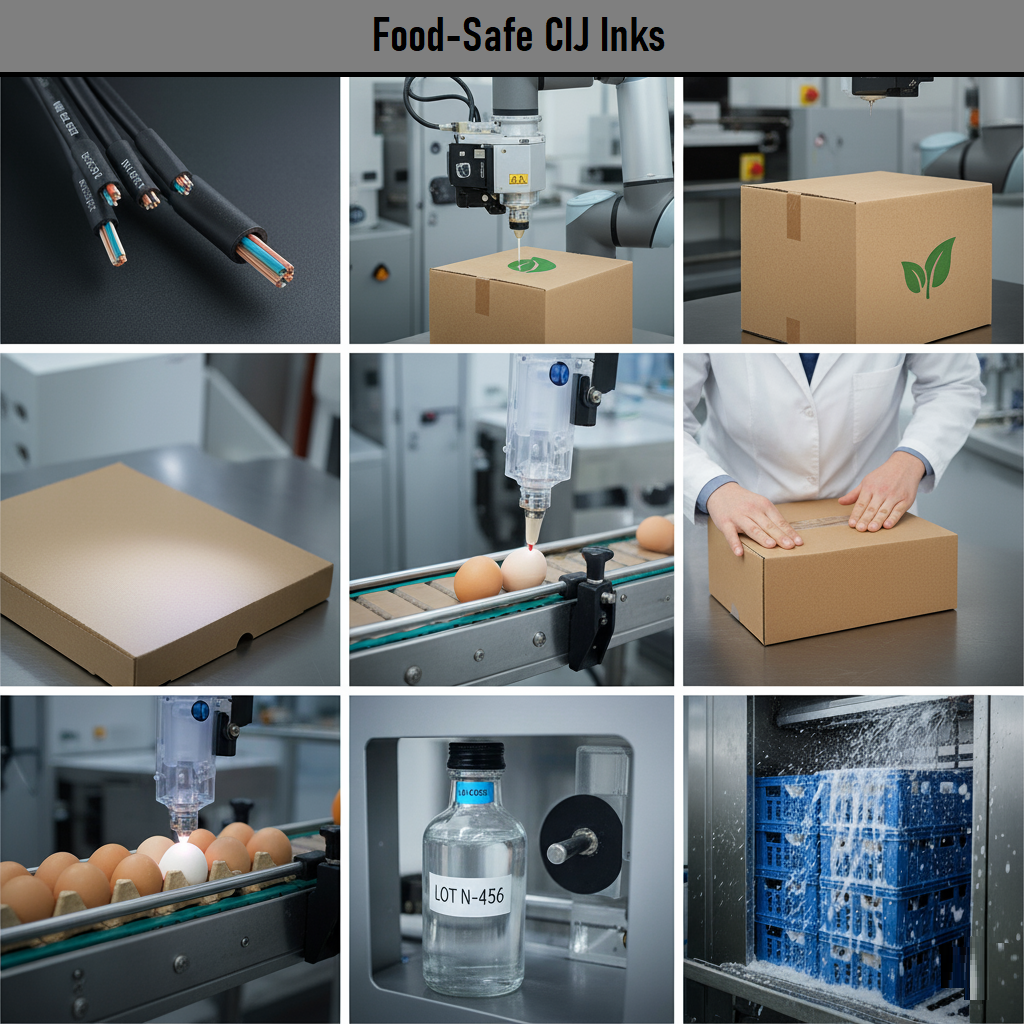
Common Types of Food-Safe CIJ Inks
Different food-safe inks are made for small-character inkjet printers and CIJ printing systems. These inks support tasks such as date coding, batch numbering, and traceability. Common types include:
MEK-Free Ink
Most CIJ inks are solvent-based. A common solvent is MEK (methyl ethyl ketone), which accelerates their drying process. But, in some industries, MEK isn’t ideal due to regulations or safety concerns. MEK-free inks are safer and better for the environment. They have lower emissions but still provide good adhesion and quick drying.
Hard-Pigmented Ink
These inks contain solid particles (pigments) rather than dyes. Hard-pigmented inks use solid pigments instead of dyes to achieve high contrast. For example, white ink works well on dark surfaces. It's also great for marking cables and wires. Inks can settle, so printers keep them agitated. This ensures proper mixing.
Fluorescent Ink
Fluorescent inks shine under UV light. This makes them great for hidden or secret coding. They’re often used for quality control, anti-counterfeiting, and tracking packaging during processing. Plus, they leave no visible marks.
Food-Grade Ink
Industries like baking and egg production make food-grade inks. They are safe for direct contact with food or edible surfaces. These inks meet food safety rules. They are often made with ethanol or other safe solvents.
Abrasion-Resistant Ink
In some cases, printed codes must resist scratching, scuffing, or friction. This is important during transportation or handling. Abrasion-resistant inks are made to last, so your codes stay clear from the factory to the store shelf.
Sterilization-Resistant Ink
In the medical and dairy fields, products usually get heat-treated or sterilized after packaging. These processes can fade or remove regular inks. Sterilization-resistant inks can handle steam, heat, and chemical washes. This makes them perfect for coding on packaging that gets sterilized after filling.
Colour-Change Ink
These clever inks change color when exposed to certain conditions. For example, they react to UV light or sterilization. They often show that a package has passed a treatment step. This is useful for quality control.
Water Wash-off and Alkali Wash-off Inks
Designers created these removable inks for returnable packaging. After use, wash bottles or crates with water or alkaline cleaners. The code washes off with little effort, so there is no need to scrub or remove labels.
Conclusion
Choosing the right food-safe CIJ inks is important. It’s about choosing something that fits your packaging material, matches your production speed, and meets all safety requirements with zero compromise.
Correct Pack offers inkjet coding machines made for food-safe inks. These inks meet industry standards for safety, durability, and readability. Our CIJ printers provide high-speed, precise, and eco-friendly printing for food packaging. You can use them to print expiry dates, batch codes, lot numbers, and other traceability information.The right ink and printer help you keep good food safety standards. They also help you meet all required regulations.
For reliable, efficient, and sustainable coding solutions, Correct Pack is here to help. We offer the technology and support your business needs to thrive.
Science and technology oriented, continuous improvement, Correct Pack always committed to providing customers with valuable products and satisfy services

China Coding & Marking Machine Manufacturer
Correct Pack Technology Company
Address: Floor 3, Building 1, No. 728, Jinhu Road, Sanzao Town, Jinwan District, Zhuhai City